Athens' Greatest Treasures: A Guide to the Top Museums in Athens
When people think of museums in Athens, the mind usually jumps straight to marble columns and ancient pottery. And yes, there is plenty of that. But Athens has quietly grown into one of Europe's most exciting cultural destinations, with a museum scene that stretches far beyond its classical roots. Whether you are a first-time visitor trying to make sense of the Parthenon's story, an art lover hunting down Byzantine icons, or a family looking for something genuinely interactive on a hot afternoon, this city doesn’t run out of options.
The museums in Athens range from vast archaeological showrooms to intimate private collections, from cutting-edge contemporary galleries to mind-bending houses of illusion. This guide takes you through ten of the best museums in Athens, with practical details, insider tips and honest advice about what is actually worth your time.
The best museums to visit in Athens are:
- Acropolis Museum – best for understanding the Acropolis
- National Archaeological Museum – best for ancient Greek history
- Benaki Museum – best for Greek culture across eras
- Museum of Cycladic Art – best for early Greek civilisation
- Byzantine and Christian Museum – best for religious history
- National Gallery / EMST – best for modern and contemporary art
Museum
Best For
Why Visit
Acropolis Museum
First-time visitors
Essential context for the Acropolis
National Archaeological Museum
History lovers
One of the world’s most important collections
Benaki Museum
Cultural overview
Covers multiple eras of Greek life
Cycladic Art Museum
Early history
Unique Bronze Age artefacts
Byzantine Museum
Religion & history
Deep dive into Byzantine Greece
EMST / National Gallery
Modern art
Contemporary perspective
The Top 10 Museums to Visit in Athens
1. The Acropolis Museum
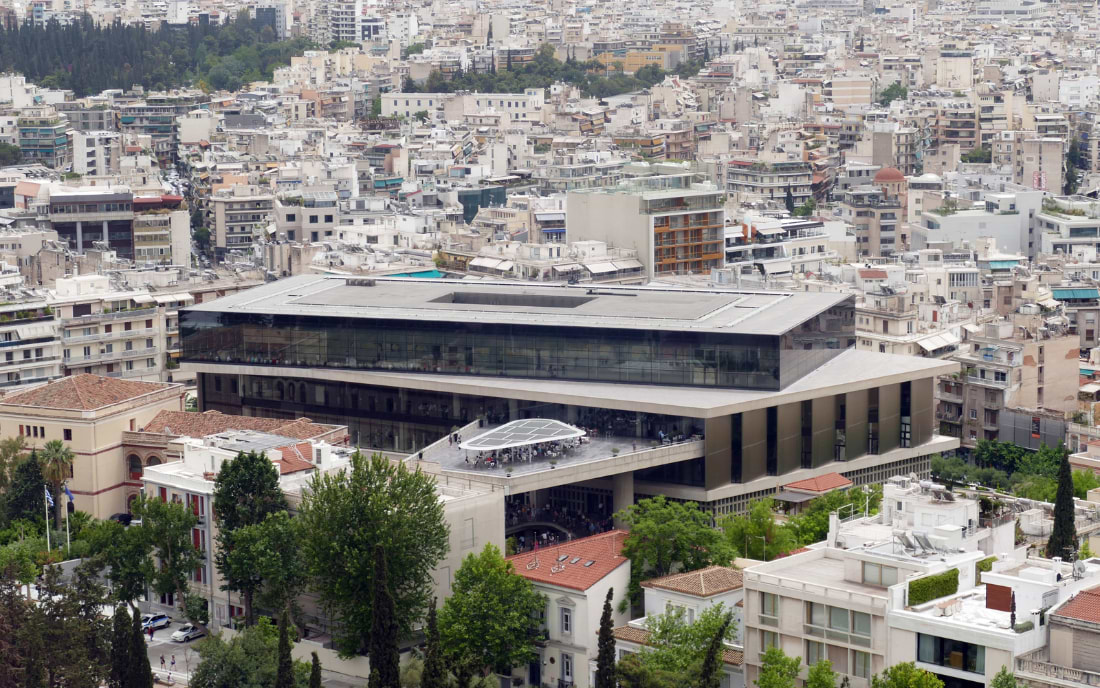
No visit to Athens is complete without spending a few hours at the Acropolis Museum Athens. Perched at the southern foot of the Acropolis hill in the Makrygianni neighbourhood, the museum sits directly above an ancient Athenian neighbourhood that you can see through the glass floors of the ground level. That detail alone sets the tone for everything that follows.
The building, designed by Swiss-American architect Bernard Tschumi and opened in 2009, was specifically conceived to house and display the surviving sculptures and finds from the Acropolis. On the ground floor, you walk over archaeological remains dating back as far as the 4th century BC. The first floor presents votive offerings, architectural fragments, and everyday objects found on the Acropolis slopes, giving a surprisingly personal glimpse into ancient Athenian life.
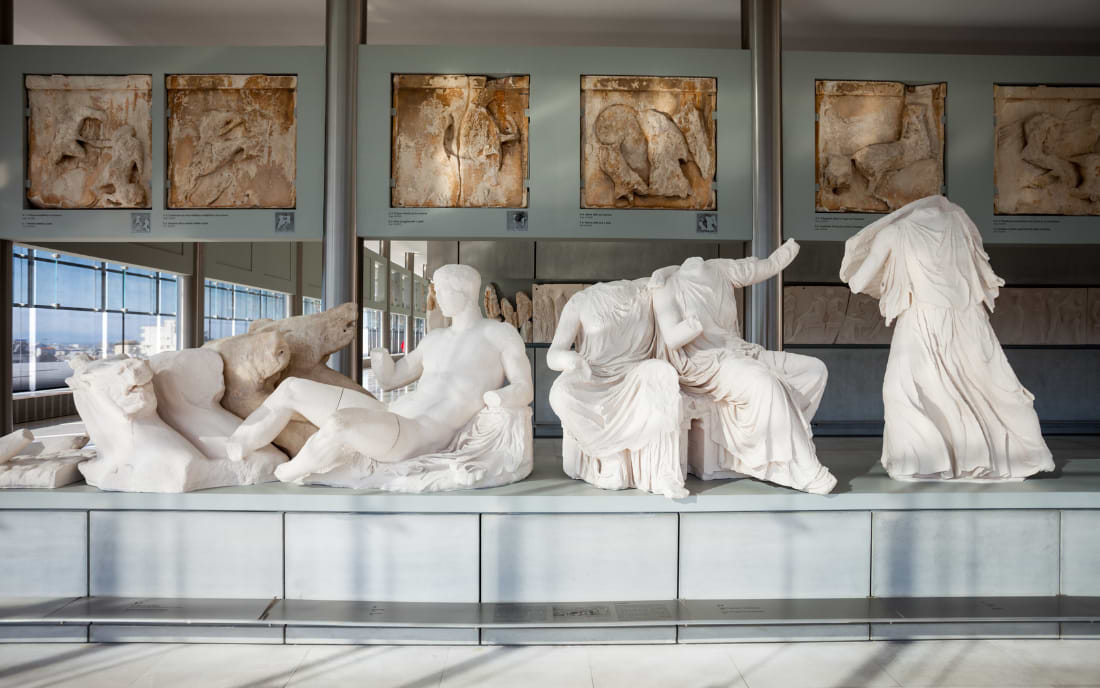
The undisputed highlight is the top floor, the Parthenon Gallery. Arranged at the exact angle and orientation of the Parthenon itself, this glass-enclosed gallery holds the surviving sections of the Parthenon frieze. White plaster casts fill the gaps left by the Elgin Marbles, now held in the British Museum, making the political and cultural debate around their return impossible to ignore. It is moving, frustrating, and fascinating all at once.
Practical Info
- Address: Dionysiou Areopagitou 15, Acropolis
- Opening hours: Daily, generally 08:00–20:00 (seasonal variations apply)
- Admission: €15; reduced rates available; free on the first Sunday of the month from November to March
- Tip: Book tickets in advance online, especially in summer. The rooftop café has one of the best views of the Parthenon in the city.
2. National Archaeological Museum
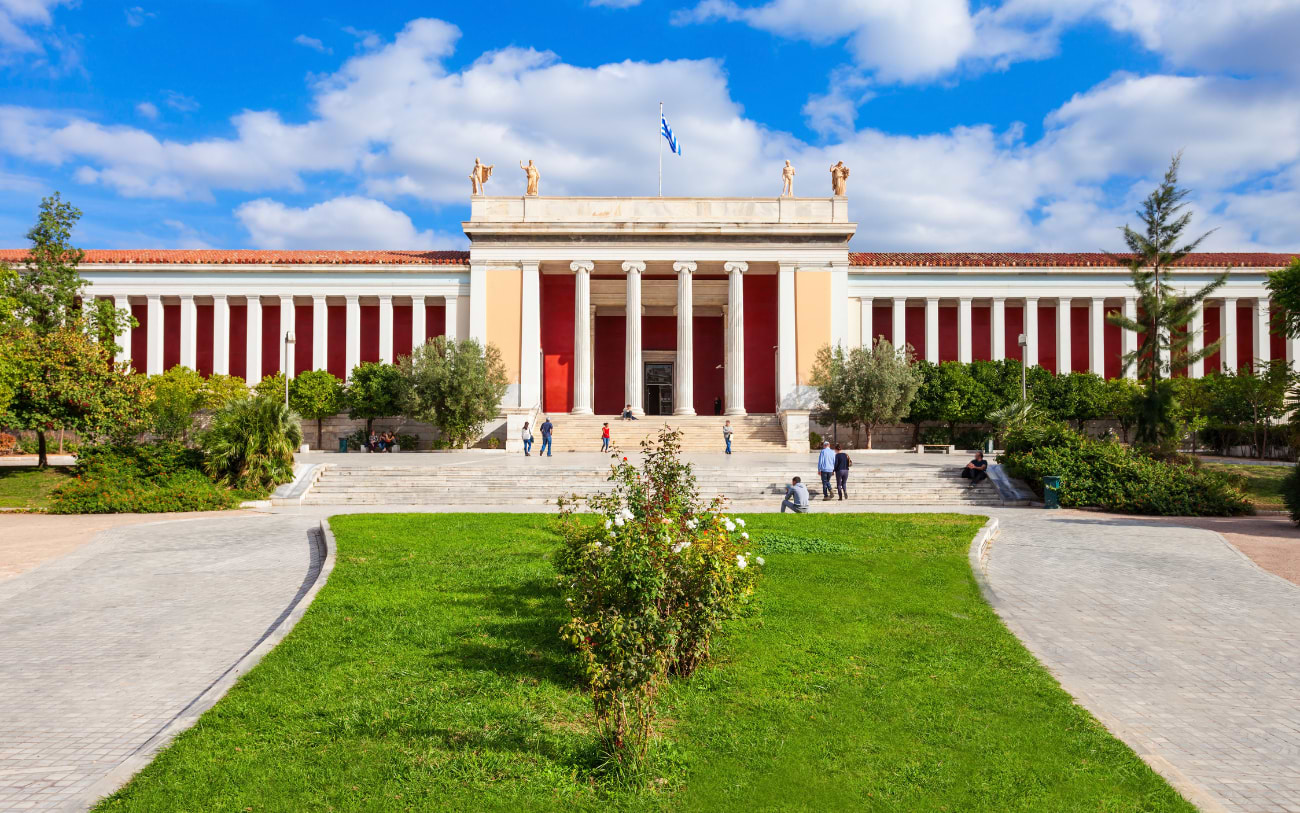
If the Acropolis Museum feels focused and curated, the National Archaeological Museum Athens is its sprawling, endlessly surprising counterpart. Housed in a grand neoclassical building in Exarcheia, this is one of the most important archaeological museums in the world, and it is difficult to overstate how much it holds.
The collection covers Greek prehistory through to late antiquity. The Mycenaean Antiquities room is a jaw-dropper, home to the Mask of Agamemnon, a beaten gold burial mask discovered by Heinrich Schliemann at Mycenae in 1876.
Elsewhere, the Cycladic collection features those famously minimalist marble figurines that directly inspired Picasso, Modigliani, and many other 20th-century artists. The Egyptian collection is another unexpected treasure, a reminder of the cultural connections stretching across the ancient Mediterranean.
Plan to spend at least three hours here, ideally more. The museum has a café and a bookshop worth browsing. For anyone serious about ancient Greek artefacts, this museum is genuinely unmissable.
Practical Info
- Address: 28 Oktovriou (Patission) 44, Exarcheia
- Opening hours: Tuesday–Sunday 08:00–20:00; Monday 13:30–20:00
- Admission: €12; reduced rates available; free on certain national holidays
3. Benaki Museum
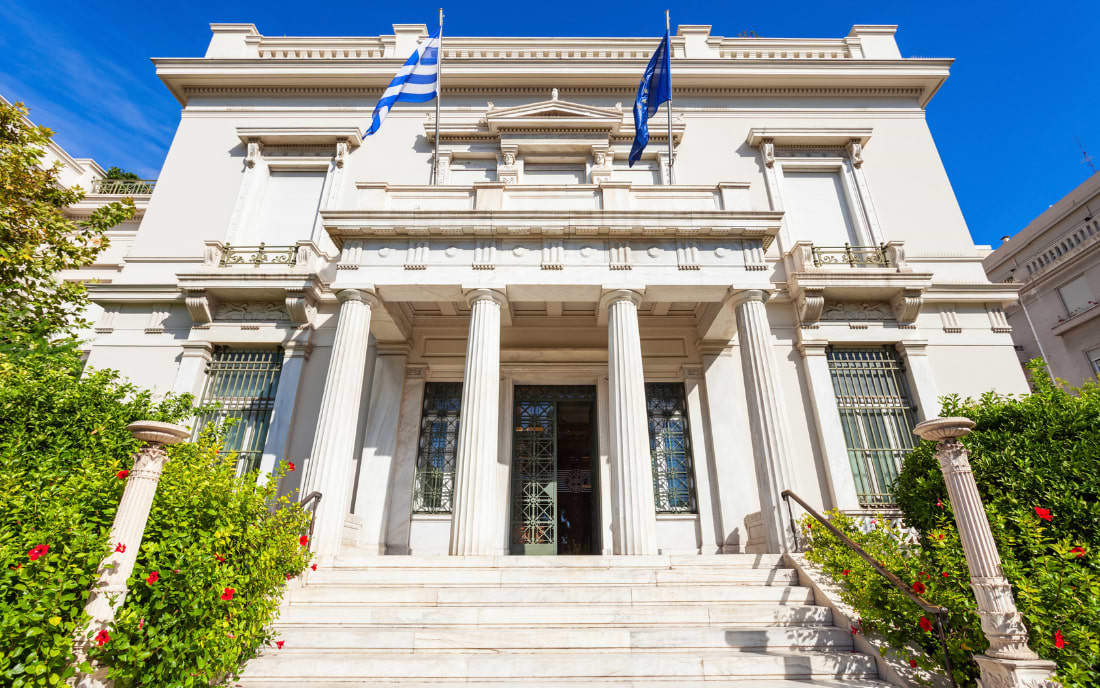
Few collections in Greece feel as personal as the Benaki Museum Athens. Founded by Antonis Benakis, a wealthy Greek merchant who spent decades assembling objects he loved, the museum opened in 1931 and now occupies a beautiful neoclassical mansion near Syntagma Square, in the Kolonaki neighbourhood.
The permanent collection spans over 5,000 years of Greek culture, from Neolithic tools to the costumes of the Greek War of Independence to 20th-century artwork. What makes it special is the curation: these are not objects arranged by type alone, but by story, context, and human meaning.
The first floor's display of Byzantine and post-Byzantine jewellery and religious icons is outstanding. The reconstructed regional Greek rooms, showing traditional interiors from different parts of Greece, are atmospheric and often overlooked. The rooftop terrace café is one of Athens' best lunch spots, with garden views and a strong menu.
Practical Info
- Address: Koumbari 1, Kolonaki
- Opening hours: Wednesday–Monday, 10:00–18:00 (Thursdays until 24:00)
- Admission: €12; free on Thursdays
4. Museum of Cycladic Art
The Museum of Cycladic Art Athens is a model of elegant, focused curation. Dedicated to the art of the Cycladic civilisation (roughly 3200–2000 BC) and ancient Greek culture more broadly, it occupies two connected buildings in Kolonaki, one of them the neoclassical Stathatos Mansion
The Cycladic figurines are the stars. These smooth, abstract marble forms, often simple standing female figures, look astonishingly contemporary. Displayed in softly lit cases against neutral backgrounds, they invite long, quiet looking. The museum handles their strangeness thoughtfully, explaining what we know (and don't know) about their use and meaning.
Beyond the Cycladic art, the museum holds a rich collection of ancient Greek pottery, bronzes, and glassware. The Stathatos Mansion section, accessible via a covered walkway, adds architectural interest and regularly hosts temporary exhibitions. This is one of the finest art museums in Athens, compact enough to cover in two hours without feeling rushed.
Practical Info
- Address: Neofytou Douka 4, Kolonaki
- Opening hours: Monday, Wednesday, Friday–Saturday 10:00–17:00; Thursday 10:00–20:00; Sunday 11:00–17:00
- Admission: €14
5. Byzantine and Christian Museum Athens
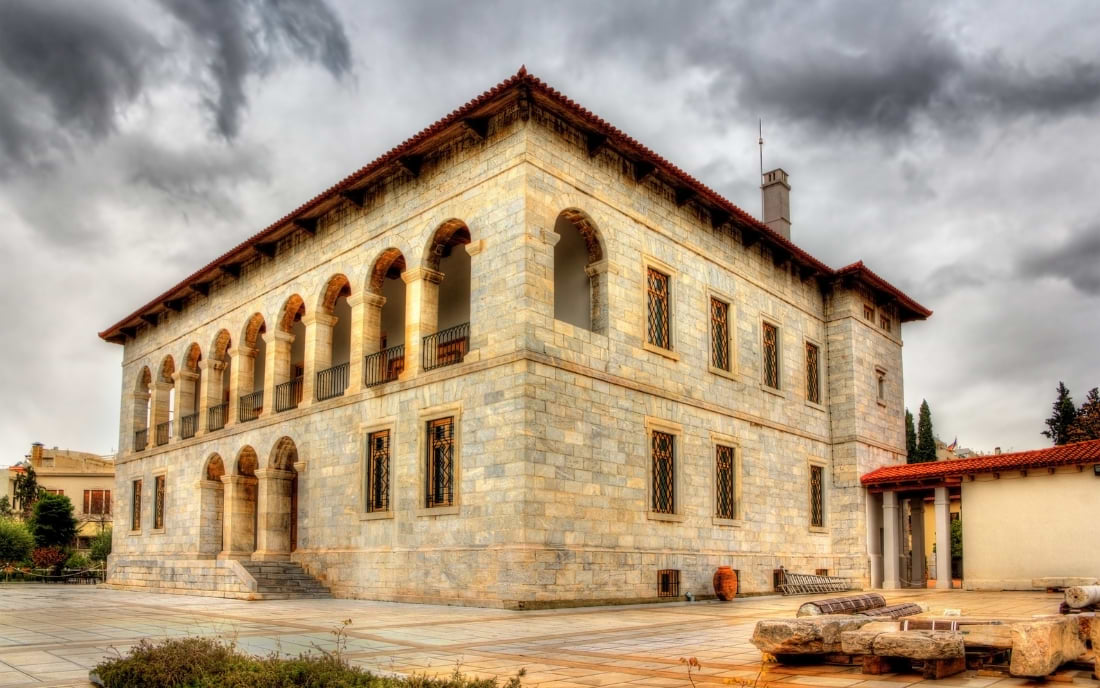
For many visitors, Byzantine art is an acquired taste. If you find yourself hesitant, the Byzantine and Christian Museum Athens is the place to convert. Housed in a beautiful 19th-century villa in Kolonaki, surrounded by gardens and a pleasant courtyard, the museum presents one of the world's most significant collections of Byzantine and post-Byzantine art in a way that is genuinely accessible.
The collection ranges from early Christian artefacts of the 3rd century AD through to 20th-century ecclesiastical works. The icons here are extraordinary and presented with real historical depth. There are also Byzantine textiles, carved wooden iconostases, silver liturgical objects, and wall paintings transferred from demolished churches.
A major underground extension, opened in the 2000s, houses the most important pieces in dramatic, modern gallery spaces. The juxtaposition with the elegant neoclassical villa above ground makes for a genuinely memorable museum experience.
Practical Info
- Address: Vassilissis Sofias 22, Kolonaki
- Opening hours: Tuesday–Sunday 08:00–20:00
- Admission: €8; reduced rates available
6. National Gallery Athens
The National Gallery Athens reopened in 2021 after a decade-long renovation and expansion, and the result is impressive. This museum in central Athens now presents the country's premier collection of Greek and European art across modern, well-designed galleries.
The permanent collection covers Greek art from the post-Byzantine period through to the 20th century, tracing the development of a distinctly Greek visual identity across five centuries. You will find landscapes of the Greek countryside painted with romantic nostalgia, war scenes from the struggles for independence, and important works by Nikolaos Gysis, Georgios Jakobides, and other leading figures of Greek painting.
The European collection includes works by El Greco, who was born in Crete, as well as paintings by Dürer, Delacroix, and Picasso. The temporary exhibition programme is among the most ambitious in Athens, regularly drawing international loans. For lovers of fine art, this is one of the most rewarding galleries in the city.
Practical Info
- Address: Vassileos Konstantinou 50, Ilisia
- Opening hours: Wednesday–Monday 10:00–18:00 (until 22:00 on Thursdays)
- Admission: €10; free on Mondays
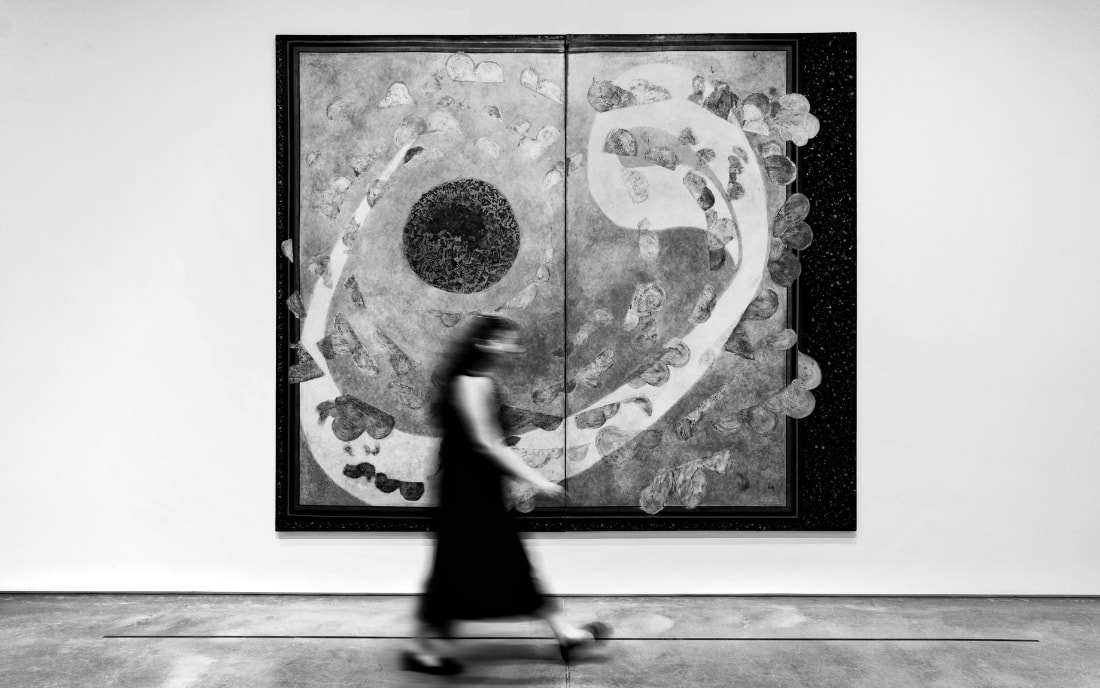
7. National Museum of Contemporary Art Athens (EMST)
For something completely different, the National Museum of Contemporary Art Athens (known as EMST) occupies a converted Fix brewery in the Koukaki neighbourhood, close to the Acropolis. It is an architecturally striking space, all industrial exposed concrete and generous natural light, well matched to the often challenging works on display.
EMST's collection focuses on Greek and international contemporary art from the 1960s to the present. The permanent collection holds over 10,000 works, including painting, sculpture, video art, and installation, with an emphasis on artists who emerged from or engaged with Greece. The temporary exhibitions are frequently excellent and bring in significant international names.
This is where you come when you have had your fill of marble and want to see what Greek creativity looks like right now. The bookshop is particularly good for design and art publications.
Practical Info
- Address: Kallirois 17–19 & Amvrosiou Frantzi, Koukaki
- Opening hours: Tuesday–Sunday 10:00–18:00
- Admission: €8; free on the first Sunday of each month
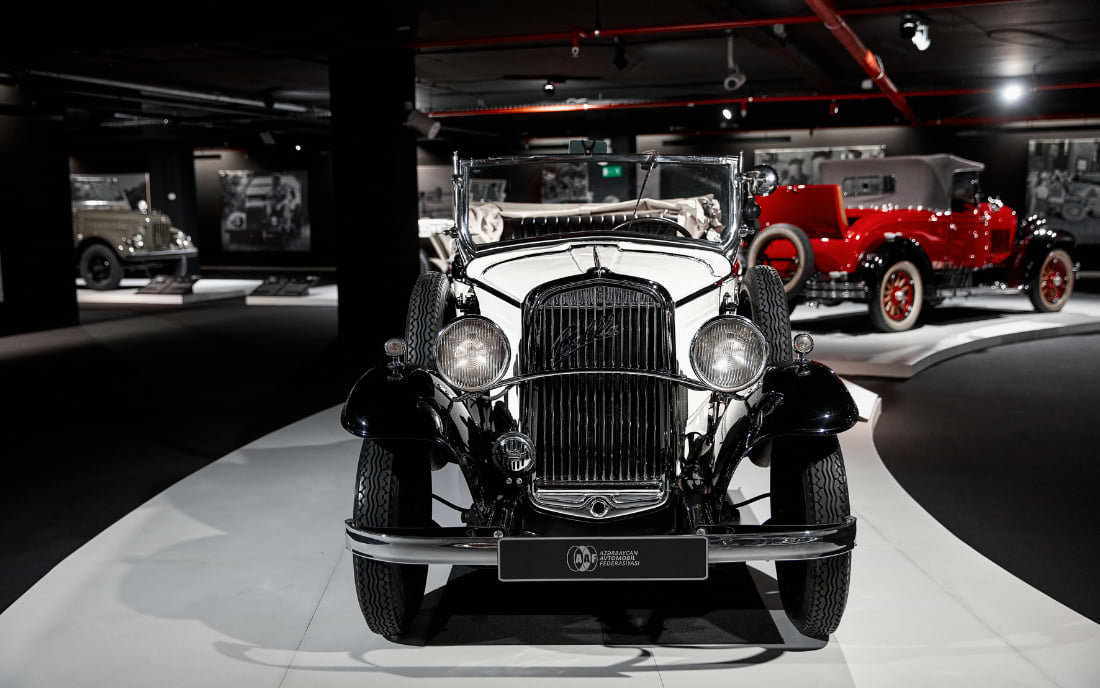
8. Hellenic Motor Museum Athens
The Hellenic Motor Museum Athens is one of the city's great unexpected discoveries, and it is outstanding for families, car enthusiasts, and anyone who fancies a break from ancient history. Located in the Acharnon area of central Athens, the museum houses a collection of over 300 vintage and classic vehicles, ranging from early 20th-century horseless carriages to Formula One cars, luxury saloons, and rare Greek-manufactured vehicles you will not find anywhere else.
The displays are well-presented and the quality of the vehicles is exceptional. Highlights include a stunning collection of pre-war European automobiles, vintage motorcycles, and a section dedicated to the history of motoring in Greece itself. Children love it, adults get distracted for hours, and the ticket price is very reasonable.
It sits slightly off the main tourist trail, which means it rarely gets crowded, a genuine plus during Athens' busier summer months.
Practical Info
- Address: Pireos 84, Acharnon
- Opening hours: Tuesday–Sunday 09:00–17:00
- Admission: €7 adults; reduced for children
9. Museum of Illusions Athens
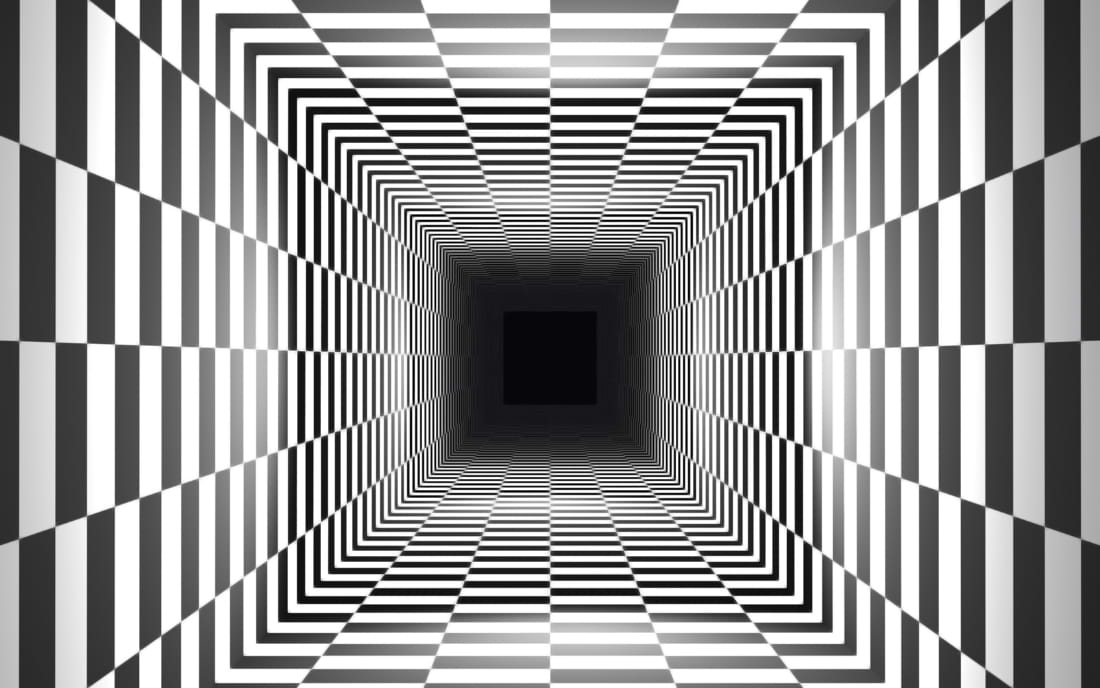
The Museum of Illusions Athens is not, strictly speaking, a museum in the traditional sense. It is an experience space filled with optical illusions, holograms, puzzles, and hands-on installations designed to trick, delight, and gently confuse. Located in a central Athens premises near Monastiraki, it is ideal for families with children, groups of friends, and anyone who enjoys being reminded that the brain is not quite as reliable as we like to think.
Rooms include a Vortex Tunnel, a 360-degree mirror room, and a range of visual paradoxes that make for brilliant photographs. The staff are enthusiastic and happy to help set up the best angles. It is not a lengthy visit (an hour is usually enough) but it delivers consistent fun and a welcome dose of levity after a morning of cultural seriousness.
Practical Info
- Location: Near Monastiraki, central Athens (check current address on the official website)
- Admission: €14 adults; reduced for children
- Tip: Book online to avoid queues, especially during school holidays
10. Kerameikos Archaeological Museum
Slightly less famous than its big neighbours but absolutely worth your attention, the small museum at the Kerameikos Archaeological Site is a hidden gem. The site itself covers Athens' ancient cemetery and the Dipylon Gate, once the grandest entrance to the ancient city. The museum stands within the grounds and displays finds from the site, many of which are of exceptional quality.
Highlights include Geometric and Archaic period pottery of extraordinary refinement, funerary sculpture, gold jewellery, and small bronzes. The scale is manageable (an hour covers it comfortably), the crowds are much thinner than at the major sites, and the combination of outdoor archaeological remains and indoor museum makes it a very satisfying visit.
Entry to the museum is included with the site admission. It is also one of the quieter places in central Athens to sit on a bench and gather your thoughts, surrounded by ancient stones and cats.
Practical Info
- Address: Ermou 148, Thiseio
- Opening hours: Daily 08:00–20:00 (seasonal hours apply)
- Admission: €8 (includes site and museum)
Frequently Asked Questions
What museums should I visit in Athens as a first-time visitor?
If this is your first trip, start with the Acropolis Museum, which provides essential context for understanding the city's most famous monument. Add the National Archaeological Museum for the full sweep of ancient Greek history, and the Benaki Museum for a more personal, atmospheric take on Greek culture across the centuries. These three together give a genuinely well-rounded introduction.
What are the top museums to visit in Athens?
The consistently highest-rated options include the Acropolis Museum Athens, the National Archaeological Museum Athens, the Museum of Cycladic Art, the Benaki Museum Athens Greece, and the Byzantine and Christian Museum Athens. For contemporary art, EMST is the standout, while the National Gallery Athens is essential for lovers of fine art.
What are the best archaeology museums in Athens?
The two giants are the National Archaeological Museum, which holds the most comprehensive collection of ancient Greek artefacts in the world, and the Acropolis Museum, which is unrivalled for its focus on the Acropolis and Parthenon. The Kerameikos Archaeological Museum is a smaller but genuinely excellent option for those who want a less crowded, more intimate experience.
What museums in Athens focus on ancient Greek history?
The National Archaeological Museum Athens covers ancient Greek history most comprehensively, from prehistory through to the Roman period. The Acropolis Museum Athens Greece goes deep on the Classical period and the Acropolis specifically. The Museum of Cycladic Art adds important perspective on the Bronze Age cultures that preceded classical Greece.
What museums in Athens are free to visit?
Several museums offer free admission on specific days. The Acropolis Museum is free on the first Sunday of the month from November to March. The National Gallery Athens is free on Mondays. The Benaki Museum waives its entrance fee on Thursdays. The National Museum of Contemporary Art (EMST) is free on the first Sunday of every month. Always check the museum's website in advance, as policies can change.
The museums in Athens are as diverse as the city itself, covering thousands of years of human creativity, from Cycladic marble to contemporary installation art. Whether you have two days or two weeks, there is enough here to keep curious minds genuinely busy.
To make the most of your time, stay centrally, within easy reach of the Acropolis and Kolonaki neighbourhoods where most of the major collections are clustered.
Leonardo Hotels in Athens puts you right in the heart of it all. Book your stay with NYX Hotel Esperia Palace Athens and arrive ready to explore.
Find your next hotel in Athens, Greece